The best ideas do not announce themselves as solutions. They begin with a person. A specific, unnamed person, sitting in a hospital waiting room, holding a scan that has already been processed, but whose result will not arrive for another two to four days. Not because the technology to read it faster does not exist. Not because no one cares. But because the infrastructure connecting that scan to a radiologist who can interpret it has not meaningfully changed in decades.
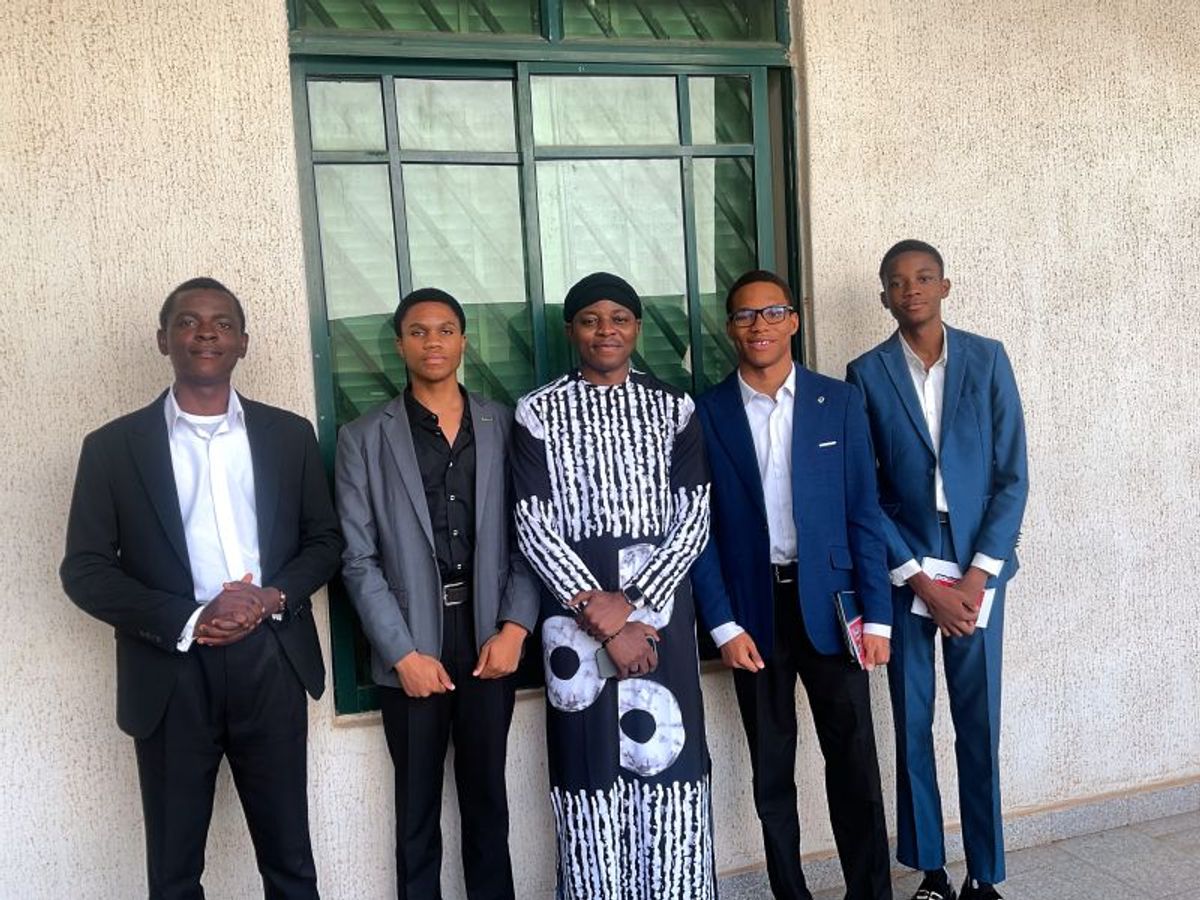
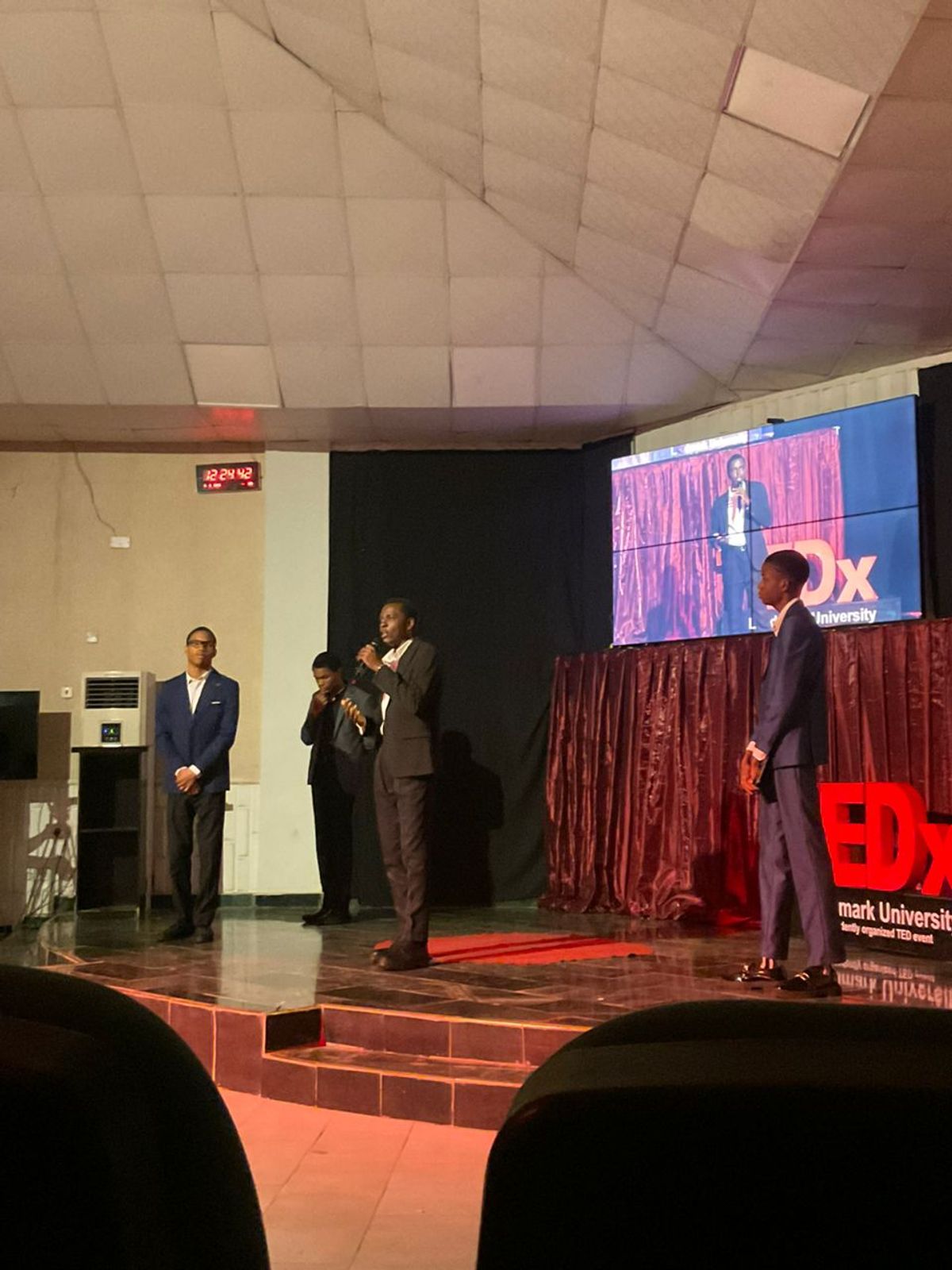
On June 7, 2025, NURRAD was invited to the TEDx stage at Landmark University to share an idea worth spreading. We did not walk out there with a product pitch. We walked out with that person's story.
What TEDxLandmarkUniversity 2025 Was
TEDx events are independently organized under license from TED, the global platform known for the mandate to share "ideas worth spreading." The TEDx programme brings that mission to local communities, universities, and institutions, creating a space where thinkers, builders, and storytellers can put forward the ideas they believe the world needs to hear.
The theme of TEDxLandmarkUniversity 2025 was "Catalyst" — a word chosen deliberately. A catalyst does not just react to the world around it. It changes the rate at which other things happen. It accelerates what would otherwise move too slowly, or not at all.
The event was held on June 7, 2025, at Landmark University, Omu-Aran, Kwara State.
Why NURRAD Was Invited
NURRAD was invited to TEDxLandmarkUniversity 2025 as a featured startup not as a speaker in the traditional sense, but as a company whose work embodied the event's theme. A startup building AI infrastructure to accelerate radiology diagnosis in Nigeria is, by definition, a catalyst. The fit was not metaphorical, it was structural.
The invitation placed NURRAD in a position that few early-stage companies occupy: sharing a stage not with competitors, but with ideas. And that is a different kind of conversation.
The Idea We Brought: Seeing the Crisis Through a Patient's Eyes
The Hult Prize stage, as we described in a previous post, is an investor environment. Judges evaluate market size, business models, financial projections, and competitive advantages. These are the right things to evaluate when you are deciding where to place a bet.
The TEDx stage is something else. It is a human environment. The audience is not evaluating you, they are listening to you. And so the approach we took was different.
NURRAD's session at TEDxLandmarkUniversity walked the audience through the radiology crisis not as a market problem, but as a human experience, from the vantage point of someone living inside it. A patient who has taken a scan. Who waits. Whose family waits. Who does not understand that the 2–4 day delay they are experiencing is not a symptom of poor care, but of a broken system — a system where one radiologist is responsible for 658,000 patients, where images travel by physical cassette, and where a 36% image inaccuracy rate quietly distorts clinical decisions that determine whether someone is treated correctly or not.
The entire NURRAD team shared the stage for this session. Each member contributed, because the story of NURRAD is not one person's story, and the problem it addresses is not one person's burden.
The Three Numbers That Change Everything
At the heart of the session were three data points that, when placed in front of a live audience, tend to shift something:
- 2–4 days. The time a patient waits for a radiology result under Nigeria's current system, a result that determines what happens to them next.
- 1 to 658,000. The ratio of radiologists to patients in Nigeria. Not a ratio that any amount of training can fix fast enough. A ratio that requires a different kind of intervention.
- 64%. The average image accuracy rate under current infrastructure. A number that means the information a doctor uses to make a life-affecting decision is incorrect more than one-third of the time.
These numbers are not abstract. On the TEDx stage, they were human. They were the person in the waiting room. They were the family who received a wrong result and made decisions based on it. They were the radiologist working at a pace that no human being should be asked to sustain.
And then they became the case for NURRAD.
What NURRAD Is Doing About It
From the problem, the session moved to the solution, and here, the presentation shifted from story to demonstration. NURRAD's platform consolidates the radiology workflow: AI Analysis that interprets medical images and increases diagnostic accuracy by over 25%, Report Generation that converts AI findings into structured clinical reports in minutes rather than days, and a Community Platform where radiologists and clinicians collaborate on cases in real time.
The ambition is not modest: to reach hospitals across Nigeria's major cities — Lagos, Abuja, Kano, Port Harcourt, and to extend that reach across Africa as the platform scales. To potentially save over $3.5 million to the Nigerian healthcare system within three years of launch, by preventing over 4,000 misdiagnosed cases.
How the Room Responded
The audience at TEDxLandmarkUniversity 2025 was engaged before the session ended. Questions came from the floor, not passive questions, but the kind that indicate genuine curiosity: about how the AI works, about what happens to jobs in radiology, about how hospitals would adopt a platform like this. The team answered them directly and openly.
The response was more than positive. The audience was interactive, informed, and visibly invested in the subject. In a room of people who had likely encountered Nigeria's healthcare system personally — either as patients, as family members of patients, or as future professionals, the problem resonated the way a real problem does: personally.
For NURRAD, that is always the point. The people most affected by a broken radiology system are not a statistic. They are in the room. They were in the room that day.
Why "Catalyst" Is the Right Word for What We're Building
A catalyst, in chemistry, is a substance that increases the rate of a reaction without being consumed by it. It does not create the reaction, it accelerates what was already possible.
NURRAD is not trying to replace radiologists. It is not trying to displace clinical judgment. It is trying to be the catalyst that allows both to operate at the speed and scale that Nigeria's patients actually need.
The existing expertise exists. The radiologists exist. The clinical knowledge exists. What is missing is the infrastructure that lets that expertise reach more patients, faster, with more accuracy. That is what NURRAD provides.
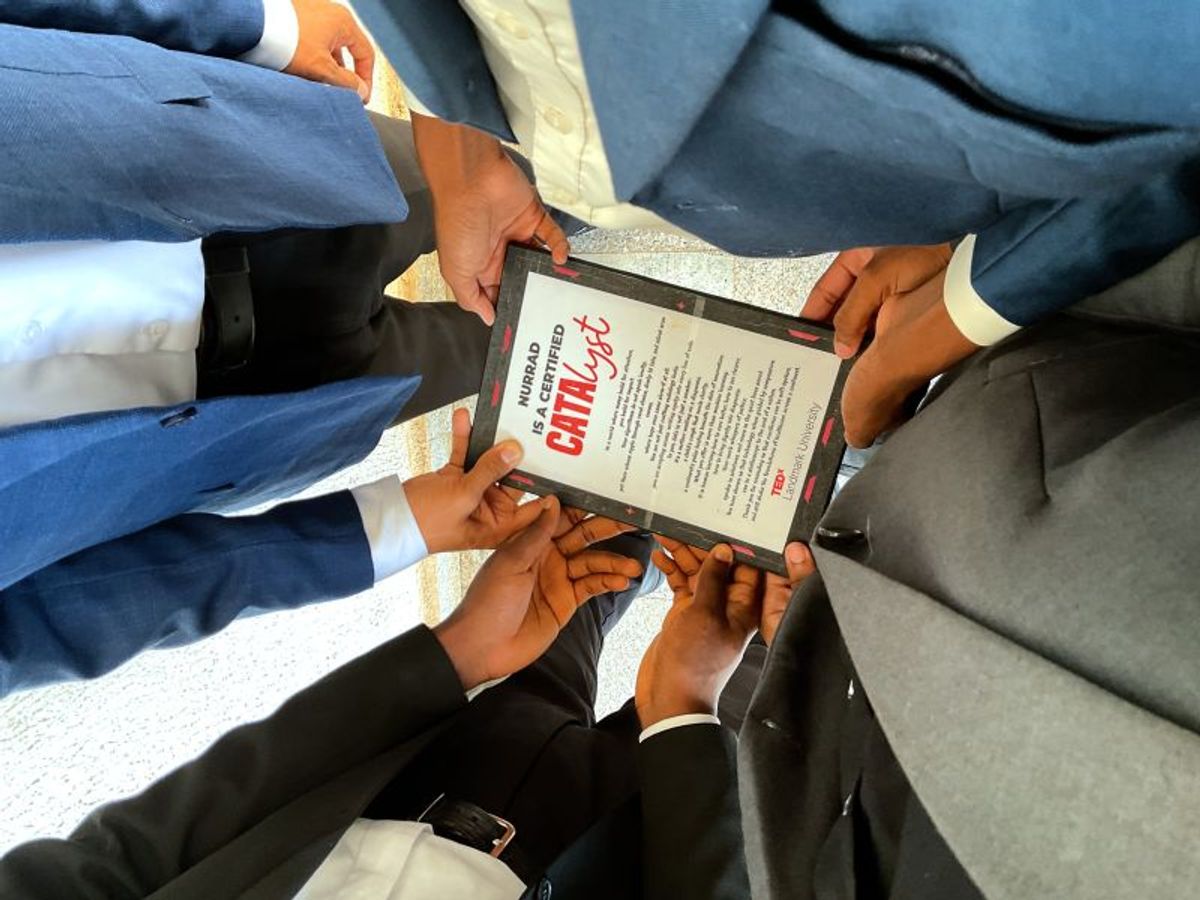
When the TEDxLandmarkUniversity team assigned the theme "Catalyst" to the 2025 event, they were describing the kind of change they wanted to talk about. NURRAD's certificate from that day reads Catalyst. But as we noted after the event, the real catalyst is what comes next.
"Our certificate now reads 'Catalyst', but the real catalyst is what's coming next." — NURRAD, June 2025
What Comes After an Idea Worth Spreading
An idea on a TEDx stage is a beginning, not an end. The value of that moment is not the applause, it is the clarity it creates. It forces a company to articulate not just what it does, but why it matters, to people who did not walk in already convinced.
NURRAD passed that test on June 7, 2025. The audience left the room with a clearer picture of what is broken in Nigeria's radiology infrastructure, and a clearer picture of what fixing it looks like.
We are building the fix. And we are doing it in a way that treats every radiologist as a partner, every hospital as a client, and every patient especially the one waiting two to four days for a result as the reason this company exists.